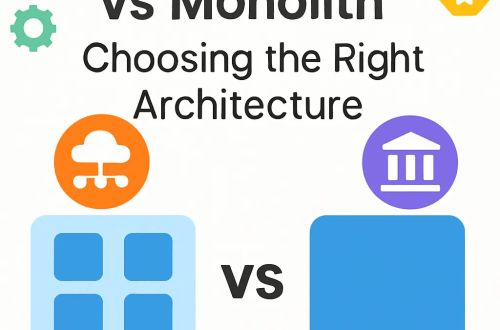
In today’s fast-paced digital era, organizations are constantly seeking innovative ways to streamline application development, enhance scalability, and optimize user experiences. The solution architect’s pivotal role and the rise of the micro frontend framework have fundamentally transformed how complex web applications are built and maintained. This article delves into these key concepts, exploring their principles, benefits, and impact on modern software engineering.
The Essential Role of the Solution Architect in Modern Web Development
The dynamic environment of web development requires the orchestration of numerous technologies, tools, and processes. Central to this ecosystem is the solution architect, a professional entrusted with the responsibility of translating business requirements into robust technical solutions. But who is a solution architect, and why has their role become indispensable in today’s marketplace?
A solution architect is a bridge between business problems and technology solutions. This role encompasses understanding the intricacies of both enterprise needs and the available tech stack. The architect develops comprehensive blueprints, ensuring that proposed architectures align with business objectives while meeting feasibility, scalability, and security requirements.
Among their core responsibilities are:
- Requirements Analysis: Solution architects engage closely with stakeholders to elicit, clarify, and prioritize business needs, translating objectives into functional requirements.
- System Design and Integration: They design system architectures that harmoniously integrate existing and new components, minimizing technical debt while optimizing performance.
- Technology Evaluation: A deep understanding of diverse frameworks, libraries, and platforms enables the architect to select the best ones for specific challenges.
- Risk Management: Identifying potential technical and business risks early, solution architects develop contingency plans and ensure continued resilience.
- Guidance and Governance: Architects mentor development teams, facilitate best practices, and uphold coding and architectural standards across the board.
In the context of large-scale and rapidly evolving web applications, the expertise of a solution architect ensures that the end product is not just technically sound but also strategically viable. Their decisions affect long-term maintainability, cost-effectiveness, and user satisfaction. As web systems grow more complex, driven by the need for modularity and concurrent development, the architectural strategies proposed by these professionals become even more vital.
Enter the paradigm of micro frontends—a trend that underscores the architect’s influence on how modern front-end applications are conceived and managed.
Unlocking Scalability and Flexibility: Micro Frontends and Their Architectural Significance
The monolithic approach to front-end development presents clear limitations as applications expand, feature sets diversify, and multiple teams contribute simultaneously. In response, the micro frontend framework has emerged as a groundbreaking solution for modular, scalable, and maintainable web applications.
Micro frontends bring the principles of microservices—once primarily confined to back-end development—to the client side. This architectural style enables distinct teams to independently develop, deploy, and scale various segments of the user interface. Each segment, or micro frontend, corresponds to a specific domain or business capability and can be implemented using its own technology stack, lifecycles, and deployment cycles.
The advantages of adopting a micro frontend framework include:
- Decoupled Teams and Codebases: Teams can work autonomously on discrete chunks of the UI, reducing bottlenecks and easing collaboration among developers.
- Seamless Scalability: Specific frontend modules can be scaled without impacting the entirety of the application, optimizing resource allocation and response time to user needs.
- Incremental Upgrades: Rolling out new features or migrating to new technologies is less risky, since changes can be isolated to individual micro frontends.
- Improved Maintainability: Smaller, focused codebases are easier to test, maintain, and refactor, resulting in fewer bugs and smoother user experiences.
- Parallel Development: Different teams can develop and deploy features simultaneously, reducing time-to-market and fostering innovation.
However, implementing a micro frontend framework is not without challenges. Ensuring seamless integration, managing shared dependencies, and providing a unified look and feel across heterogeneous modules require careful architectural planning. This is where the solution architect’s expertise becomes invaluable. Effective micro frontend implementation demands:
- Strategic Domain Segmentation: Dividing the front end based on logical business capabilities to avoid excessive coupling and promote real autonomy among teams.
- Clear Communication Protocols: Defining APIs and contract-based interactions among micro frontends to ensure interoperability and data consistency.
- Shared Component Libraries: Leveraging design systems and shared UI libraries to deliver a uniform experience, despite the underlying diversity in technologies.
- Centralized Governance: Establishing standards for cross-cutting concerns—such as authentication, state management, and performance monitoring—while still enabling flexibility at the team level.
The solution architect’s vision and leadership guide these processes. By anticipating integration pitfalls, fostering cross-team collaboration, and prescribing modularization strategies, they transform the promise of micro frontends into tangible business value. The result is not merely technical sophistication, but real-world agility—organizations become capable of rapid innovation, seamless scaling, and a nimbler response to shifting market demands.
Moreover, embracing micro frontends inherently aligns with other strategic priorities such as cloud-native development, CI/CD pipelines, and DevOps practices. As microservices and cloud architectures become the standard for enterprises, having congruent patterns in the front end reduces cognitive overhead, aligns organizational practices, and clarifies ownership boundaries.
When executed well, micro frontends provide both business and technical leaders with a framework to support ambitious growth plans, facilitate acquisitions or partnerships, and expand digital offerings without the drag of legacy constraints. Companies can select “the right tool for the job” at both the team and component level, orchestrating a harmonious blend of innovation and operational discipline.
Conclusion
In summary, the evolution of solution architecture and micro frontends marks a transformative era in web development. Solution architects empower organizations to adopt cutting-edge practices, aligning technological choices with strategic objectives. Micro frontend frameworks unlock modularity, scalability, and innovation, reshaping how teams collaborate and deliver seamless digital experiences. Together, these advancements set the stage for resilient, future-proof web applications in a fast-changing world.