The ever-evolving landscape of web development demands robust frameworks and flexible architectures. Understanding leading technologies like Angular and modern concepts such as micro front ends is crucial for developers, CTOs, and business leaders alike. In this article, we’ll explore Angular’s pivotal role, the emergence of micro front end frameworks, and how these trends shape large-scale web applications today.
The Power of Angular in Today’s Web Development
Angular has cemented its place as one of the leading front end frameworks in the world, renowned for its scalability, maintainability, and comprehensive feature set. Its consistent support from Google and vibrant community make it a top choice for enterprises building complex, high-performance applications. But what truly sets Angular apart?
Comprehensive Tooling and Type Safety
Angular offers a rich set of built-in functionalities, including dependency injection, advanced routing, reactive forms, data binding, and ahead-of-time (AOT) compilation. These features out-of-the-box reduce reliance on third-party libraries and can lead to more maintainable codebases. Furthermore, TypeScript integration ensures type safety, empowering teams to catch bugs early and streamline debugging processes.
Rapid Development with Angular CLI
The Angular CLI (Command Line Interface) is invaluable for scaffolding, building, testing, and deploying applications. This tool not only accelerates development but also enforces best practices, maintaining consistency across large teams. Automated testing support through tools like Jasmine and Karma further enhances code quality throughout the application lifecycle.
Component-Driven Architecture
A core principle in Angular is its component-based architecture. By dividing the UI into encapsulated, reusable pieces, teams can develop and test features independently, leading to improved modularity and easier collaboration. This approach also simplifies future updates: entire components, or even sections of the application, can be modified with minimal impact elsewhere.
Enterprise-Grade Applications and Ecosystem
Given its robustness, Angular is often chosen for enterprise-scale projects—ERPs, CMSs, and financial dashboards, to name a few. Support for server-side rendering (Angular Universal), internationalization, and accessibility ensures Angular applications meet diverse organizational requirements. Its extensive ecosystem of libraries, UI component toolkits, and developer resources amplifies productivity and expedites time-to-market.
Of course, selecting the right development partner is critical to leveraging Angular’s capabilities fully. For organizations seeking proven expertise, perusing a curated list of the best Angular development companies can be transformative. These companies possess the skills and experience to architect robust, scalable solutions tailored to unique business needs.
The Micro Front End Revolution: Rethinking Web Application Architecture
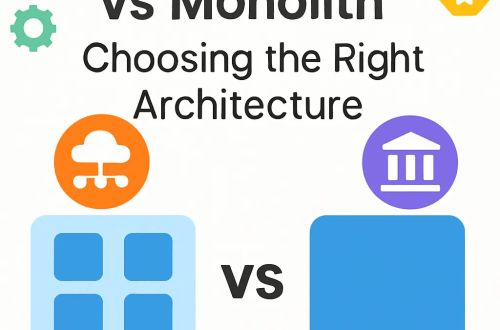
As front end applications have grown in size and complexity, traditional monolithic architectures present challenges in scalability, maintainability, and team autonomy. Enter micro front ends—a paradigm inspired by microservices, allowing developers to build UIs as a composition of independent, self-contained applications. How does this reshape the development landscape?
Decentralized Development and Deployment
The primary advantage of micro front end architecture lies in its ability to decentralize both development and deployment. Multiple teams can work independently on different parts of the UI—each with their own tech stacks, release cycles, and processes. This minimizes bottlenecks, speeds up innovation, and allows organizations to scale globally distributed development teams.
Technology Agnosticism
Unlike traditional architectures that often restrict the entire frontend to a single technology stack, micro front ends promote technology diversity. Teams can choose frameworks that best fit their requirements, whether Angular, React, Vue, or Vanilla JS. This flexibility also future-proofs projects: legacy modules can exist alongside cutting-edge technologies as organizations gradually modernize their stack.
Improved Maintainability and Resilience
Micro front ends enhance maintainability by dividing complex applications into smaller, manageable pieces. Individual micro apps can be updated, replaced, or rolled back independently without affecting the rest of the system. This not only boosts resilience but also facilitates A/B testing, canary deployments, and gradual feature rollouts in production.
Challenges and Best Practices
Adopting micro front ends isn’t without challenges. Teams must address cross-application communication, global state management, and performance optimization. Proven strategies—such as using shared event buses, design systems, and container applications—help manage these complexities. Robust CI/CD pipelines and automated testing across micro apps are essential to safeguard quality.
To make informed decisions about implementing a micro front end architecture, it’s vital to stay current with evolving practices and frameworks. A deep dive into the micro front end framework landscape can provide organizations with the insight needed to assess suitability, gauge implementation costs, and anticipate scalability benefits.
Seamlessly Combining Angular and Micro Front Ends for Modern Solutions
While Angular and micro front ends can function independently, their union creates powerful synergies. Angular’s modular structure meshes well with micro front end principles, making it a popular choice when constructing distributed frontend architectures within large enterprises.
Building Large-Scale Systems
For expansive organizations, creating a monolith with Angular may work in the early stages. However, as the application grows, scaling development teams and accommodating frequent updates becomes more challenging. Transitioning to a micro front end architecture, with Angular powering individual micro apps, brings significant advantages:
- Incremental Upgrades: Modernizing legacy features or adding new ones is achievable without overhauling the entire codebase.
- Cross-Team Collaboration: Multiple teams can develop, deploy, and maintain isolated micro apps independently, leveraging Angular’s ecosystem and skills.
- Customized Technology Mix: While Angular is a strong candidate for core modules requiring sophisticated features, less critical modules can use lighter-weight frameworks for speed and innovation.
- Focused Testing & Monitoring: Teams can implement targeted testing, tracking, and monitoring for each micro app, ensuring higher reliability and faster issue resolution.
Concrete Implementation Strategies
Combining Angular with micro front ends involves architectural and infrastructural decisions:
- Container Applications: The shell or host application loads and orchestrates micro apps, providing global services like authentication and design systems. Angular’s router and lazy loading capabilities excel as part of the container.
- Framework Isolation: To prevent version conflicts and shared state issues, micro apps must operate within encapsulated environments. Technologies such as Webpack Module Federation, iframes, or single-spa help achieve this separation.
- Design System Integration: Maintaining a cohesive user experience is essential. Shared UI libraries and design tokens help blend independently developed micro apps seamlessly.
- Inter-Module Communication: Setting up robust communication channels (custom events, shared state containers, or RESTful APIs) is vital for coordination among Angular-based micro apps and those built with other frameworks.
Progressive migration is recommended: begin with one micro front end for a specific domain, integrate it within an Angular shell, then iteratively carve out further features. This reduces risk and ensures continuous delivery without large-scale rewrites.
Performance Considerations
- Bundle Size: While micro front ends can lead to redundant framework code, diligent code splitting and shared runtime optimizations with tools like Module Federation reduce overhead. Angular’s AOT compilation and tree-shaking further help shrink bundle sizes.
- Loading Strategy: Prioritize critical micro apps for immediate load and defer others. Use lazy loading, prefetching, and prioritized resource allocation to optimize perceived and actual performance.
Security and Governance
As more teams collaborate on distributed micro apps, enforcing security policies and code governance becomes essential. Centralized authentication, authorization, and code review practices must be standardized. Angular’s robust security features (sanitization, XSS protection) can be leveraged across micro apps for consistent safety standards.
Looking Ahead: The Evolution of Front End Architectures
The combination of mature frameworks like Angular and the fresh philosophy of micro front ends empowers organizations to break bottlenecks and deliver flexible, future-proof web solutions. As best practices and supporting tools continue to evolve, businesses must cultivate adaptable teams, invest in ongoing education, and rigorously evaluate their architectures to remain at the cutting edge.
Conclusion
In summary, Angular remains a preferred framework for enterprise-scale web development due to its modularity, tooling, and thriving ecosystem. The rise of micro front end frameworks addresses modern challenges by promoting decentralized, scalable architectures. Harnessing both allows businesses to innovate, reduce risks, and stay future-ready. Strategic adoption of these technologies, driven by expert partners and ongoing learning, can transform how organizations build and deliver outstanding web experiences.